
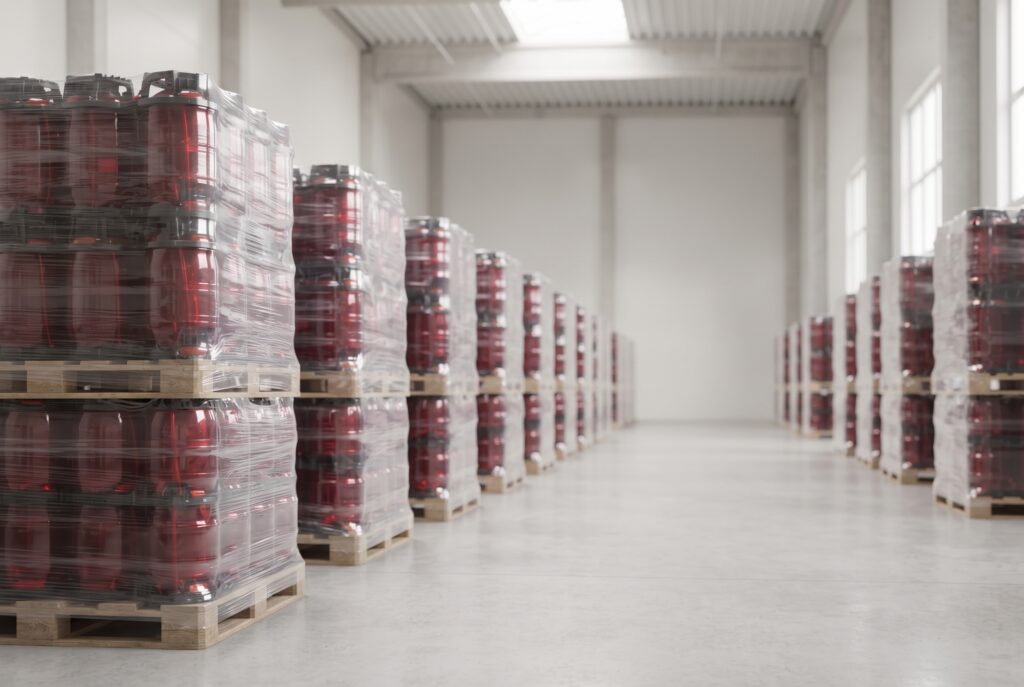
A stainless steel keg only earns back its cost when it comes back. On routes where a keg turns once or twice a year, most of its life is spent as return transport, cleaning cycles and idle capital in a warehouse.
Where the model breaks down
The lower the rotation, the heavier those costs weigh. Export and long-distance routes are the clearest example: the keg travels for weeks, sits at the customer, and then has to travel back empty before it can earn anything again.
What a one-way keg removes
- No capital tied up in a fleet
- No cleaning cycle before every fill
- No return leg, no deposits and no tracking
- No write-off when a keg does not come back
An empty Dolium keg weighs 0.95 to 1.25 kg against an average of 9 kg for stainless steel, so a load carries more beverage and less packaging.